Imran Khwaja’s long run as ICC Associate director ends
The senior Singapore cricket administrator lost elections for the position on Tuesday
Nagraj Gollapudi
Published: Jul 8, 2026, 4:31 PM (11 hrs ago)
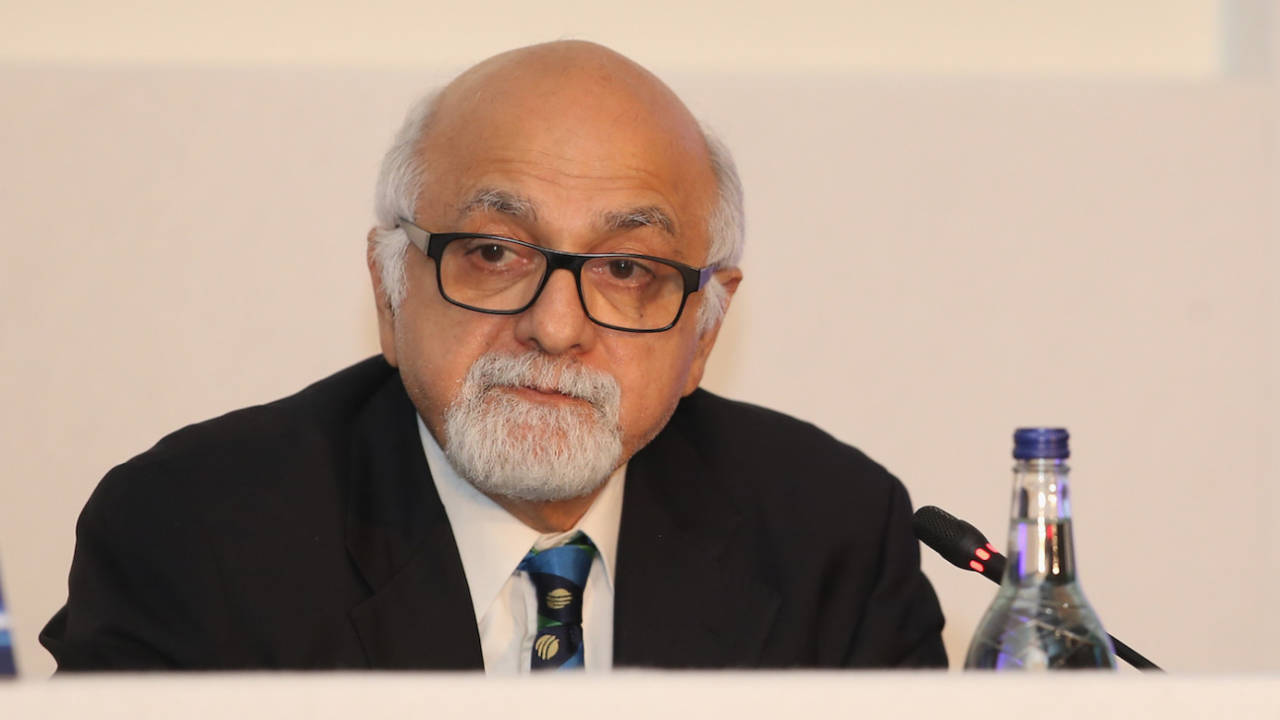
Imran Khwaja occupied significant positions at ICC in the past • ICC via Getty
Imran Khwaja’s nearly two-decade long run as an Associate director on the ICC Board has come to an end after the senior Singapore cricket administrator lost out in elections on Tuesday. Consequently, Khwaja, who was first elected to the ICC Board in 2008, will also step down as deputy chair after the ICC’s annual general meeting this week.
According to the ICC constitution only a current director can get picked by the ICC Board to serve as deputy chair, a position Khwaja was initially elected to in 2017 and then re-elected in 2024. Khwaja was one of five contenders vying for the three spots Associate representatives occupy on the ICC’s 16-person Board comprising. Elections for the three posts are held every two years at the ICC annual conference, with each tenure lasting two years.
Elections this time were hotly-contested, Khwaja among three incumbent directors elected – along with Mubashshir Usmani (Emirates Cricket Board) and Mahinda Vallipuram (Malaysia Cricket Association) – looking to get re-elected. Gurumurthy Palani (France Cricket) and Rudie van Vuuren (Cricket Namibia) were contesting for the first time.
Lobbying and canvassing behind the scenes for support by the candidates had been underway for a while this time and loomed over the start of the AGM, taking place in Edinburgh this year. Out of the eligible 43 votes from Associate Members, Palani secured 35, followed by Usmani and van Vuuren receiving 26 votes each, which was three more than Khwaja (23) with Vallipuram finishing last (19). Palani will now vacate his seat on the ICC’s chief executives committee after getting elected as one of the two Associate representatives last year.
Just by dint of how long he had been on the board, Khwaja’s exit, is seen as a surprise. A former president of the Singapore Cricket Association, Khwaja had sat on the ICC Board since 2008, first as a representative and then as the chair of the Associate Members. In 2020, after his close ally Shashank Manohar stepped down as ICC’s first independent chair, Khwaja contested elections for the top spot but suffered a bruising defeat across two rounds to New Zealand’s Greg Barclay.
Regardless, Khwaja continued to occupy significant positions. A lawyer specialising in dispute resolution, Khwaja brought his extensive experience to the ICC, often as the appointed mediator in complex situations. His negotiating skills were on display during the stand-offs between BCCI and PCB ahead of the 2025 Champions Trophy and more recently prior to the 2026 men’s T20 World Cup. On both occasions Khwaja diffused high-volatile situations which could have jeopardised the events.
Ahead of the Champions Trophy, Khwaja played a lead role in both boards agreeing to a hybrid model whereby both countries would play at neutral venues in global tournaments hosted by one of India or Pakistan. Earlier this year Khwaja represented the ICC in front of the Pakistan government which eventually paved the way for the PCB to back down from a boycott call and for Pakistan to play India in the T20 World Cup. He was also head of the task force navigating a way forward on the issue of Afghan women’s cricketers, engaging with the Afghanistan Cricket Board and representatives from the country’s ruling Taliban government.
In a statement the ICC Chaiman Jay Shah, said: “I congratulate Gurumurthy Palani, Mubashshir Usmani and Dr Rudie van Vuuren on their election as Associate Member Directors to the ICC Board.
“I would also like to express my sincere appreciation to Imran Khwaja and Mahinda Vallipuram for their dedication and service to Associate cricket. Their contribution to the ICC and to the development of the global game over many years has been significant and deeply valued.”
Nagraj Gollapudi is news editor at Cricinfo